
The Spotify Effect Devours AI: (NYSE: SPOT)

Image Courtesy: Swapnil Sharma via Pexels
Our Latest PodCast: ai sings the same old Music industry blues
Silicon Valley’s ancienne noblessenever seems to shy from the bold stroke. True to form, earlier this year, tech bazillionaire Jack Dorsey bluntly announced that “Intelligence tools have changed what it means to build and run a company.“
Shortly after that, his fintech shop Block (NYSE: XYZ), formerly known as Square, laid off over 4,000 of its 10,000 total staff. Since markets love bloodshed above all else, company value jumped 20%.

With 4,000 fewer employees showing up for work, Dorsey won’t be needing most of Block’s spiffy digs in downtown San Francisco.
What seems to matter: Dorsey’s mass sacking confirmed the AI narrative that companies can do more for humans without hiring actual humans. But other managers say — particularly human resource professionals — that the automated workforce has morphed into a handy management excuse.
Dorsey, they argue, had simply over-hired out of Covid. They point out, when Elon Musk bought Twitter, he fired something like 8 out of 10 employees. Certainly, Block’s firings have done nothing to repair enterprise value.
Block, “the stock,” is still stuck at less than 60% of its peak 2021 value.
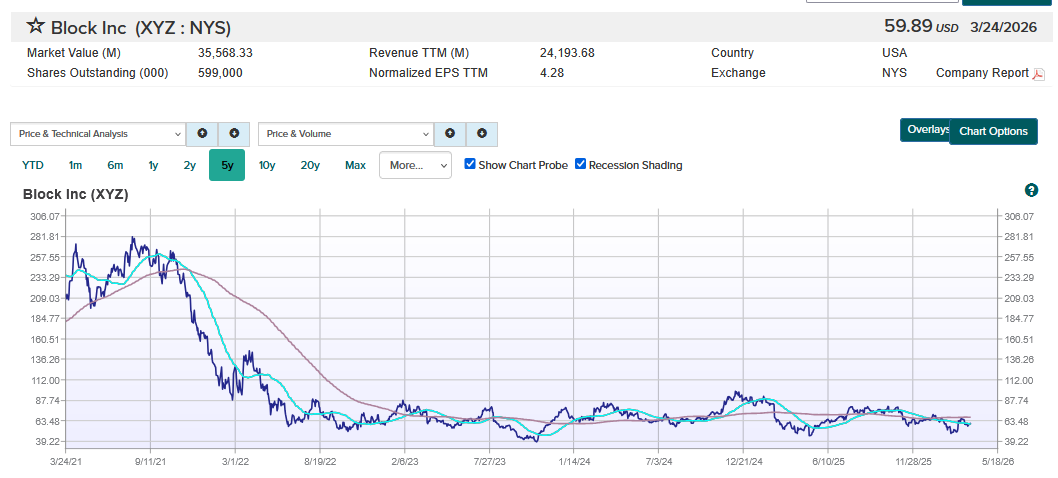
Cutting staff by 40% has done nothing to repair Block’s collapsing enterprise valuation, which saw a peak in 2021.
What actually matters: Such AI anxieties over staffing and value overlook decades of high-quality sales and operating data for other digital assets.
By far, the most important is the Recording Industry Association of America’s revenue database. Here, starting in the 1970s, the famously chaotic music industry has taken extra care to keep an exact census of the sale of each-and-every vinyl record, cassette tape, compact disc, and streamed music file sold or downloaded through the 21st century.
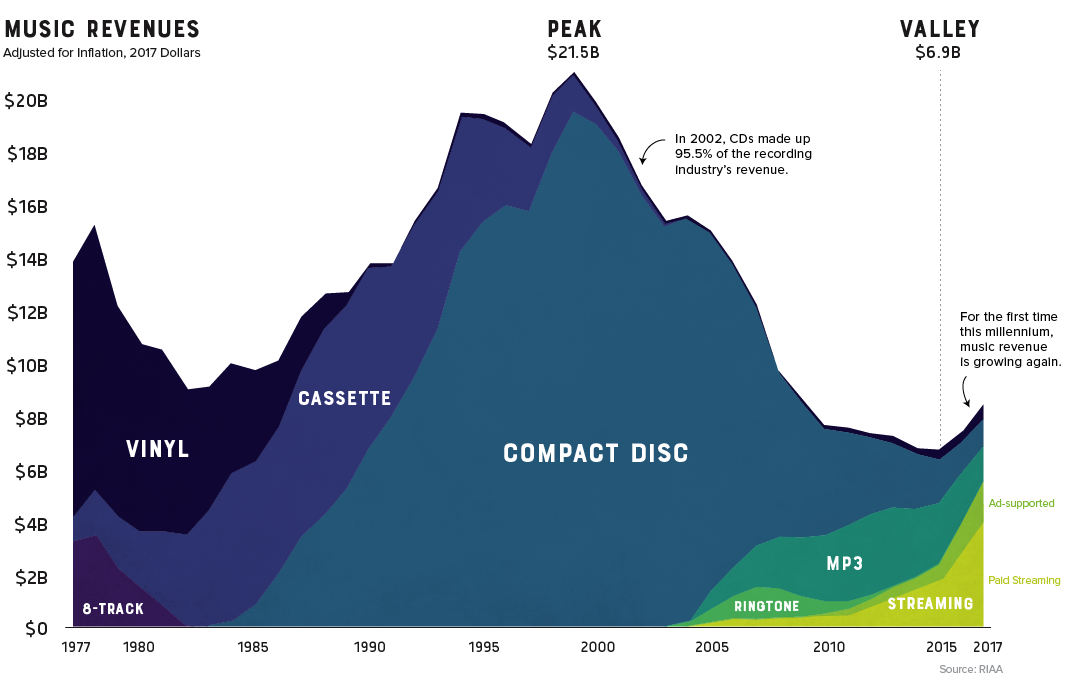
The Song Remains The Same: RIAA by-format revenue data graphically shows the rise and fall of LPs, tapes, CDs, digital formats, and streaming. Sales peaked in 2000, at about $21.5 billion, nominally.
Digital Deflation: What makes the Recording Industry Association sales data indispensable is when inflation is factored in. Back out the effect of rising prices, and the deflationary pressure of digital assets become clear.
In the music industry’s case, when adjusted for inflation, sales peaked at about $15 billion. Never to return. Instead, sales have leveled off at about $10 billion in inflation-adjusted dollars, mostly in streamed media.
The music industry, like the latest Justine Timberlake album, is kind of flat.
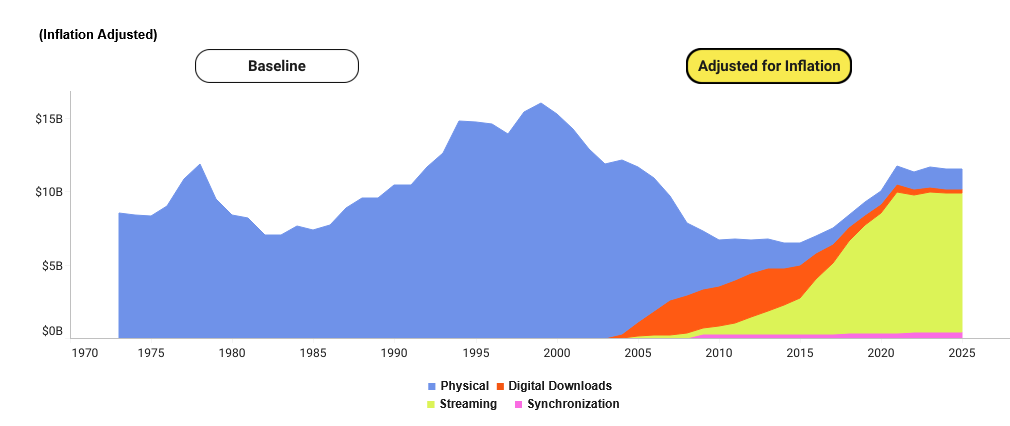
The critical tune: When the affects of inflation over time are factored in, sales peaked at $15 billion about 2000 and never recovered.
The Spotify Effect: With music industry data in hand, AI needs no robots to understand. Deflationary pressure from digital products is so mature that software companies themselves are being devalued.
The reference for just how much value will be lost by software companies is streaming music giant Spotify (SPOT).
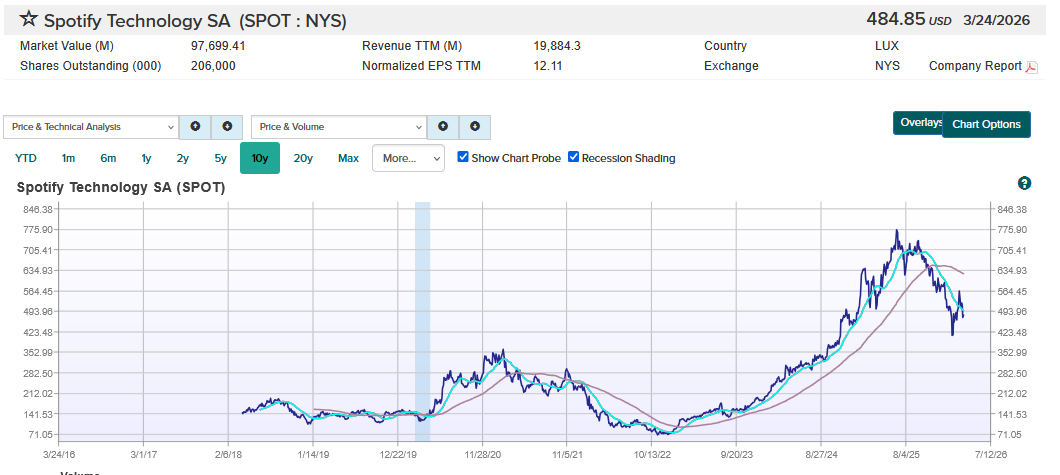
The flat sales and thinner margins — that any digital asset faces — is dragging down Spotify. Company stock is off about 20% since last year. It won’t improve.
Software Is Eating Itself: It was 2011 when Mark Andreessen, then-partner at venture tech shop Andreessen-Horowitz, wrote that “software is eating the world.” It’s still true today. Once time is factored in, digital things do nothing but drive down sales, prices, and overall value.
AI is just the latest digital thing being eaten alive. Worrying about who will — and won’t — get hired changes nothing.